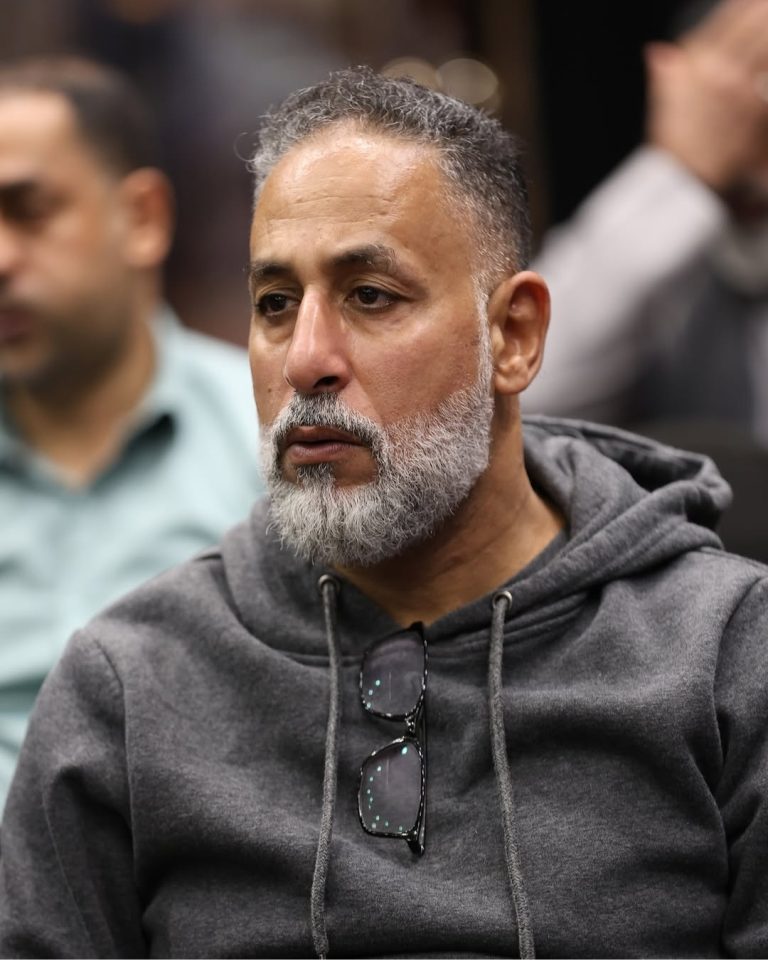

LYON, 13 OCTOBER 2026. Ahmed Jaafar Mohamed Ali, a Bahraini political opponent held in Bahrain’s Jau Prison since 2022 has filed a civil claim against the International Criminal Police Organization (INTERPOL) before the Tribunal judiciaire de Lyon. A preliminary hearing will take place today, Tuesday 13 October 2026, at 9am. Ahmed Jaafar Mohamed Ali, represented by Maître Alexandra Prassoloff, argues that INTERPOL committed a fault by issuing a Red Notice at Bahrain’s request, which led to his arrest in Serbia and his subsequent extradition to, and detention in, Bahrain where he has been tortured and mistreated. He is seeking compensation for the damages caused by Interpol’s wrongful actions.
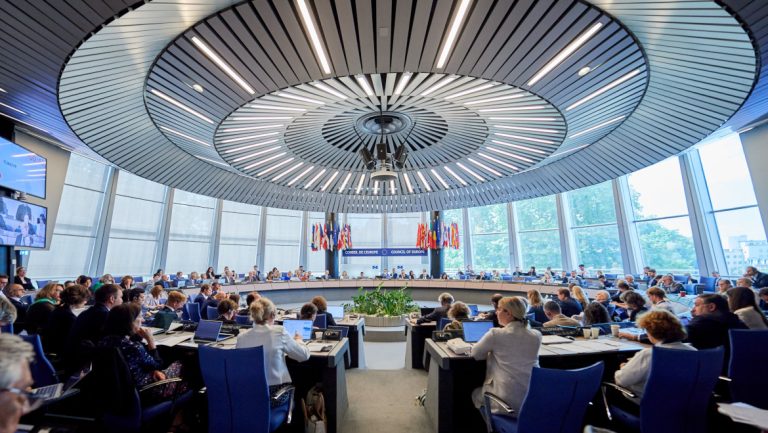
The hearing today will focus on Interpol’s assertion that it has immunity from this claim. It follows a series of written pleadings which have been filed by the parties. This is one of the first times that a French court will rule on Interpol’s asserted immunity from legal action seeking compensation in France in respect of Red Notices. The Lyon Court’s ruling will be a landmark decision.
The case comes before a French court at a time when INTERPOL is presided over by Lucas Philippe, a senior French National Police officer, who was elected President of the organisation in November 2025 for a four-year term. The hearing also takes place amid growing documentation of the misuse of Red Notices by States to pursue political opponents, human rights defenders and journalists abroad, including investigations by the French outlet Disclose and the BBC Eye.
Timeline of key events:
Ahmed Jaafar Mohamed Ali took part in Bahrain’s 2011 popular uprising against the national authorities. He was later convicted in absentia on fabricated terrorism-related charges and sentenced to life imprisonment. This conviction formed the basis of the INTERPOL Red Notice that led to his arrest in Serbia 3 November 2021 and subsequent extradition on 24 January 2022. In a separate case, he received another life sentence on 26 February 2015. This case involved the murder of three police officers, including an Emirati officer, an offence that took place while he was not even in the country. The same proceedings resulted in the executions of three individuals convicted in the case. UN experts have condemned these ‘arbitrary executions’, with the UN Special Rapporteur on Extrajudicial, Summary or Arbitrary Executions declared these executions to be ‘extrajudicial killings’ in a European Parliament resolution denouncing the executions.
On 3 November 2021, he was arrested in Belgrade pursuant to an Interpol Red Notice, which Bahrain had requested on the basis of these unlawful convictions, and placed in extradition detention. While in detention, he applied for political asylum in Serbia, however his application was rejected. On 18 January 2022, the Serbian courts ruled that the conditions for extradition were met, and the Serbian Ministry of Justice signed an extradition decree.
Facing imminent extradition to Bahrain, where he was a targeted opponent and at risk of torture, he lodged an urgent application with the European Court of Human Rights (ECtHR) under Rule 39 of the Rules of the Court. On 21 January 2022, the ECtHR issued an interim measure ordering the Serbian government not to extradite him. Despite this and in flagrant breach of the Court’s order, Serbia extradited him to Bahrain on 24 January 2022 and he was flown to Bahrain on a UAE charter operator, RoyalJet.
On 29 January 2022, the Bahrain News Agency confirmed his return to the Kingdom to serve his sentence, stating that the extradition had taken place “with the assistance of INTERPOL”.
In a judgment delivered on 25 March 2025 (Ali v. Serbia, no. 4662/22), the ECtHR found that Serbia had violated Article 3 of the European Convention on Human Rights, which prohibits torture and inhuman or degrading treatment, by failing to properly examine his claim that he faced a risk of ill-treatment in Bahrain before extraditing him.
On 15 September 2026, the Committee of Ministers of the Council of Europe called on Serbia to take the necessary measures, including diplomatic steps, to obtain information from the Bahraini authorities about his current situation and to ensure that his rights under Article 3 are effectively protected.
UN experts have previously raised serious concerns about Jau Prison and urged Bahrain to ensure that prisoners are treated humanely and with dignity and to avoid life-threatening consequences. In brief telephone calls with relatives Ahmed Jaafar Mohamed Ali has repeatedly described conditions that amount to torture including being assaulted and mistreated; overcrowded cells where inmates sleep on the floor; alternating repeated periods of solitary confinement; and a ban on written correspondence. Since his extradition in January 2022, he has been allowed only one family visit.
The claim before the Tribunal judiciaire de Lyon argues that, by issuing this Red Notice, INTERPOL violated its own Constitution and committed a fault that engages its civil liability. As with any legal entity operating on French territory, there must be a remedy against INTERPOL when its wrongful actions cause harm to a third party.
Ahmed Jaafar Mohamed Ali suffered considerable harm as a result of the publication of the Red Notice, and is seeking compensation for:
- the anxiety and distress he suffered following the publication of the Red Notice; and
- the harm resulting from his arrest and extradition to Bahrain, and detention there.
INTERPOL argues that it enjoys immunity from legal proceedings. However, Mr Ali submits in this claim, inter alia, that an international organisation’s immunity must be set aside where it does not provide an effective alternative remedy. In practice, there is no such remedy: people targeted by Red Notices issued in breach of INTERPOL’s rules have no means of obtaining compensation for the harm caused.
Earlier this month, Ahmed Jaafar Mohamed Ali spoke by telephone with Sayed Ahmed Alwadaei, Director of Advocacy at the Bahrain Institute for Rights and Democracy (BIRD), who has been assisting him during his imprisonment. He said: “I suffered torture and I have been sentenced to life imprisonment on the basis of fabricated charges. I hold INTERPOL responsible for facilitating my extradition from Serbia to Bahrain and for my unimaginable suffering since being extradited.”
Sayed Ahmed Alwadaei, who advocates for the release of political prisoners and conducts international advocacy initiatives, said: “INTERPOL has destroyed Ahmed Jaafar’s life and devastated his family. He is now languishing in Bahrain’s notorious Jau Prison, enduring appalling conditions that no human being should ever be subjected to. He has also been repeatedly assaulted by prison officials and criminal inmates, putting his life at risk. INTERPOL must face the consequences of its actions. No organisation should be allowed to hide behind immunity after facilitating a political prisoner’s unlawful extradition, exposing him to torture and imprisonment for the rest of his life”.
UPDATE: A hearing took place today, 13 October, before the Lyon Court in France in a civil claim brought against INTERPOL by Bahraini political prisoner Ahmed Jaafar Mohamed Ali.
The court is expected to deliver its judgment on 31 December 2026 on the preliminary question of whether INTERPOL enjoys immunity from legal proceedings in this case.