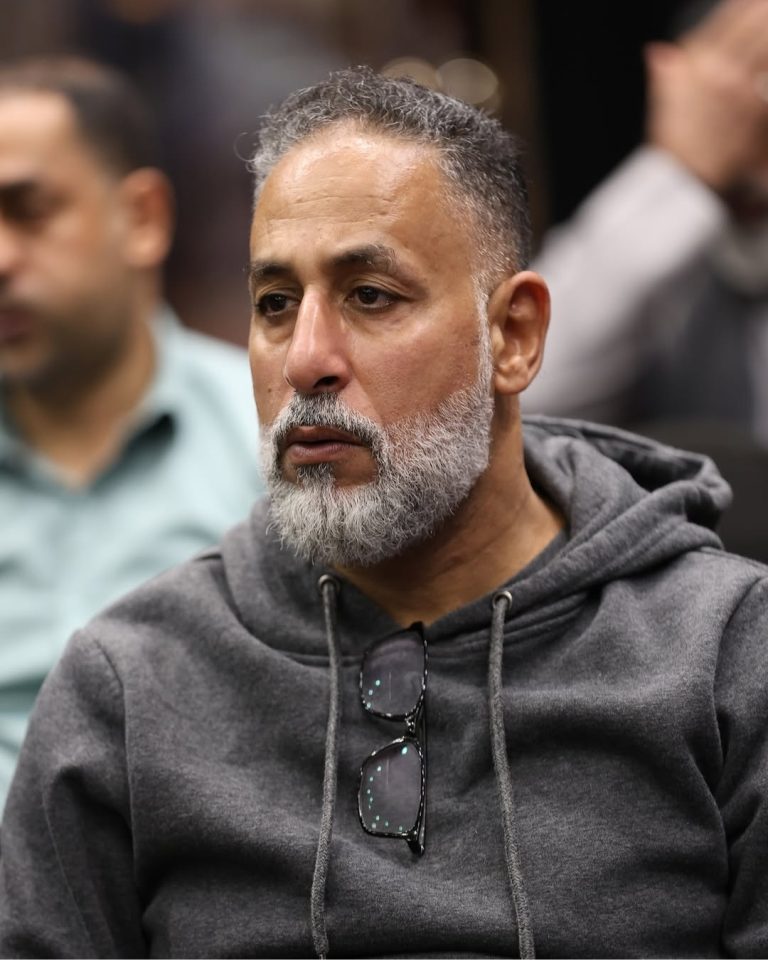
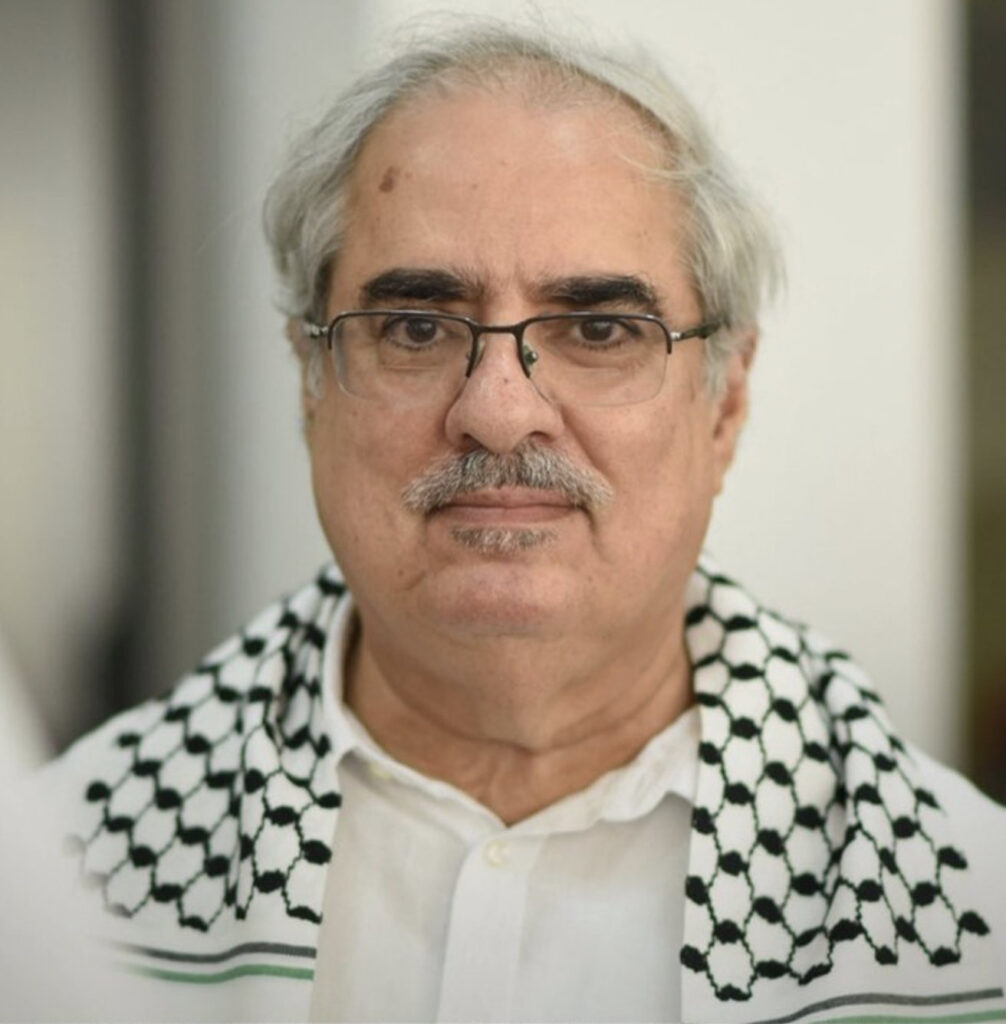
On 17 February 2026, the Criminal Court of Appeal accepted the appeal in form and substance, rejected it on the merits, upheld the appealed judgment, and ordered the replacement of the custodial sentence with an alternative penalty. The court directed that Mr Sharif be released from imprisonment upon signing a pledge not to deal or communicate with media channels deemed to ‘insult sister Arab countries’, and to comply with weekly attendance at the Alternative Penalties Centre, the Bahrain Institute for Rights and Democracy (BIRD) said today.
The Court of Appeal confirmed Mr Sharif’s conviction over comments made during a media interview in Beirut criticising Arab governments’ failure to defend Palestinians and framing their stance as a ‘surrender’. While the court maintained the guilty verdict, it ruled that the remainder of the six-month prison sentence would be replaced with a non-custodial measure, leading to his release from Jau Prison.
Although Mr Sharif is expected to be released, pending approval by the Public Prosecution Office, the court expressly affirmed the underlying conviction and adopted a legal rationale that further entrenches the criminalisation of peaceful political expression in Bahrain. The conviction itself continues to rest on provisions of the Penal Code that are incompatible with international standards on freedom of expression.
Commenting on Mr Sharif’s conviction, Sayed Ahmed Alwadaei, advocacy director at Bahrain Institute for Rights and Democracy, stated: “Ebrahim Sharif’s release is a relief, but it does not erase the fact that he was imprisoned for peacefully exercising his right to free expression. His detention was an assault on freedom of speech. Bahrain must abolish its draconian laws criminalising free speech.”
The appeals court’s decision to replace imprisonment with an alternative punishment mitigates the immediate harm of detention but fails to remedy the fundamental injustice of the conviction itself. Mr Sharif was punished for expressing political opinions on matters of public interest, conduct that is fully protected under international law.
Fundamental flaws remain unaddressed
The trial court’s judgment, now left substantively intact by the appeals court, remains flawed in three key respects.
Mr Sharif was prosecuted under Articles 165, 215, and 92 of the Bahraini Penal Code, provisions that are routinely misused to punish peaceful speech. Article 165 criminalises anyone who “expressly incites others to develop hatred or hostility towards the system of government.” Article 215 targets a person who “offends in public a foreign country or on [sic] international organization based in the State of Bahrain or its president or representative.” Both carry a prison sentence and a fine which cannot exceed 200 dinars, and are vaguely worded offences whose misuse to suppress legitimate political expression has been repeatedly identified by United Nations human rights mechanisms. The UN Special Representative on human rights defenders has warned that prosecutions under Article 165 for allegedly “encouraging hatred of the State” or “distributing falsehoods and rumours” frequently risked suppressing lawful expression. In 2018, in its concluding observations on Bahrain’s compliance with the International Covenant on Civil and Political Rights (ICCPR), the Human Rights Committee noted its concern for Bahrain’s imposition of serious restrictions on freedom of expression and “the large number of arrests and prosecutions of individuals criticizing State authorities or political figures.”
The judgment’s application of these provisions to Mr Sharif’s case is flawed in three specific respects.
First, the judgment reflects a profound misunderstanding of freedom of expression. Mr Sharif’s comments were political opinions criticising the foreign policy positions of Arab governments in relation to Palestine. The court treated these as criminal acts, applying Article 168’s prohibition on “false news” to what were plainly political value judgments. Calling a government “complicit” or “silent” is a political characterisation, not a factual claim capable of being proven true or false. The court’s reasoning collapses the distinction between opinion and fact, effectively criminalising political criticism itself.
Second, the judgment systematically overstates what Mr Sharif actually said, distorting his words beyond any possible interpretation. Mr Sharif called for boycotts, public pressure, and political change through public opinion, all of which are forms of peaceful civic action. Yet the court characterised these statements as incitement capable of “destabilising security and stability” and “undermining the longstanding social fabric,” and asserted a “direct link” to the likelihood of violence without identifying any evidence whatsoever of actual or threatened violence. The judgment simply assumes that calls for peaceful political pressure are inherently destabilising, a standard that would criminalise virtually all political speech.
Third, the judgment adopts a fundamentally flawed legal premise by asserting that the public and media nature of Mr Sharif’s statements removes them from the protection of freedom of expression. The court held that because the statements were made openly through a media outlet, they acquired a “criminal character” and fell outside constitutional and international safeguards. This reasoning is legally unsustainable. Freedom of expression exists precisely to protect public speech, including speech disseminated through the media. Political opinions expressed in interviews, broadcasts, or publications are at the very core of protected expression, not an exception to it. To treat media dissemination as a basis for criminal liability reverses the logic of free expression law and effectively renders all public political speech vulnerable to punishment, nullifying the right itself. Under international human rights law, the form, platform, or reach of expression cannot justify its criminalisation where the content is peaceful and political in nature.
Mr Sharif’s conviction demonstrates Bahrain’s continued failure to heed international recommendations and to bring its legal framework into line with its obligations.
Pattern of repression and conditions of detention
Mr Sharif’s arrest at Bahrain International Airport marks the tenth time he has faced detention, interrogation, or prosecution since 2011 for exercising his right to free expression. His continued imprisonment reflects a broader pattern in which authorities use vague speech offences to silence opposition figures, journalists, and human rights defenders.
During his pretrial detention at Dry Dock, Mr Sharif was held in appalling conditions marked by severe overcrowding and poor hygiene. Despite his advanced age (68) and medical conditions, his family reported that Mr Sharif was confined in unsanitary, overcrowded cells reportedly infested with bed bugs. Concerns regarding systemic deficiencies within Bahraini prisons have been raised by the UN Committee against Torture, which in 2025 highlighted persistent reports of overcrowding, insanitary conditions, and serious shortcomings in prison medical services, including at Dry Dock Detention Centre. The Committee warned that such conditions pose heightened risks to elderly and medically vulnerable detainees.
Violations of international free expression standards
Mr Sharif’s conviction violates Article 19 of the ICCPR, which protects the right to hold opinions and to impart information and ideas of all kinds. The UN Human Rights Committee has explicitly stated that “imprisonment is never an appropriate penalty for defamation” and has called on Bahrain to decriminalise criticism of governments. Mr Sharif’s case exemplifies Bahrain’s continued failure to bring its laws and practices into compliance with these standards.