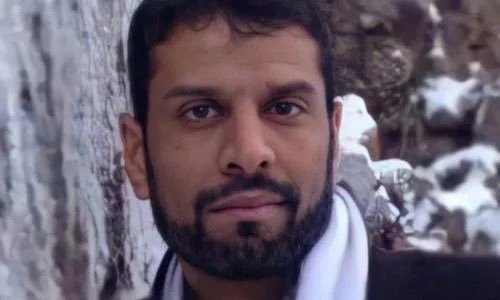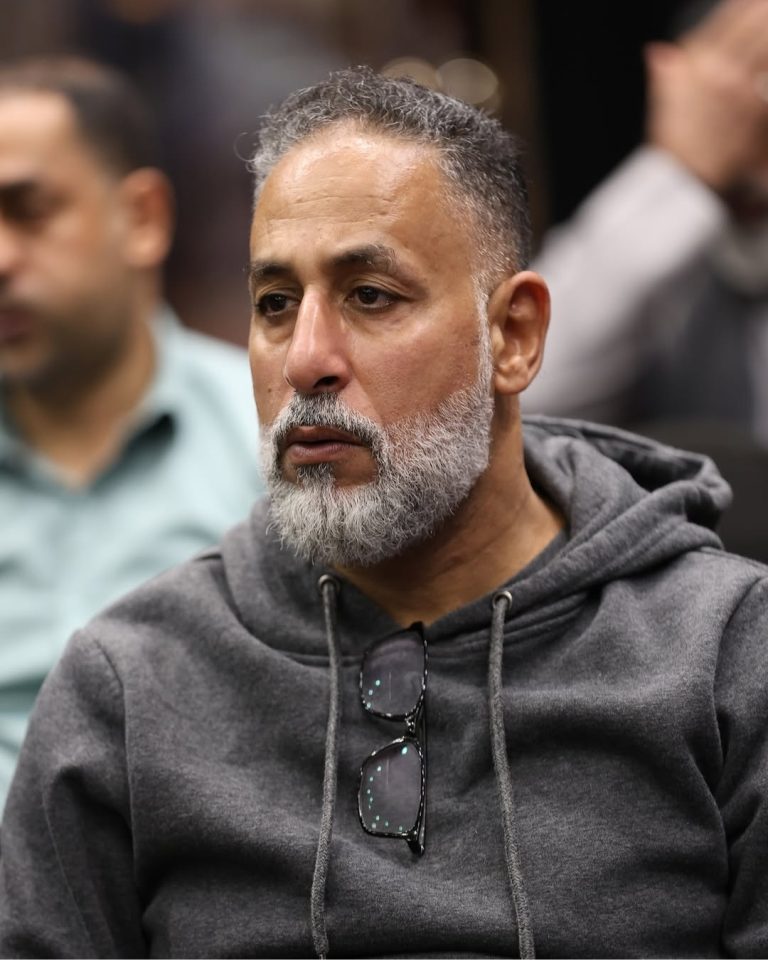

London – 27 July 2026The UK Supreme Court has dismissed the Bahrain government’s appeal, ruling that it cannot rely on state immunity to block a civil claim alleging it hacked the UK-based computers of two Bahraini dissidents, Dr Saeed Shehabi (72) and Moosa Abd-Ali Mohammed (45), causing them personal injury.
The central issue before the Court was whether the personal injury exception in section 5 of the State Immunity Act 1978 (SIA) applies where the alleged perpetrators were outside the UK but carried out the hacking remotely.
In a majority judgment, the Court held that section 5 covers acts committed through remote or automated means, even where the person responsible is physically outside the United Kingdom.
It concluded:
“Concluding on the interpretation of section 5, the meaning of “an act” in section 5 of the SIA includes an act carried out using a device or other automated or remote means, even if the person responsible for carrying out the act is not physically present at the location where the act takes place. Therefore, hacking into a computer located in the United Kingdom by a foreign agent situated abroad is an act in the United Kingdom under section 5 [131]. Such conduct interferes with the territorial sovereignty of the United Kingdom. Where a foreign state caused an explosion in this country, the infringement is just as great if caused by a drone remotely controlled from abroad [133].”
The Court drew an analogy with a drone attack launched from abroad, holding that the infringement of UK sovereignty is no less serious simply because the act is carried out remotely.
Applying that principle to this case, the Court found:
“In the present case, the acts involved surveillance of Dr Shehabi and Mr Mohammed. That surveillance took place in the United Kingdom. It involved a serious and intrusive interference with the territorial sovereignty of the United Kingdom [136]. It makes no difference that surveillance is carried out by means of computer hacking rather than by a human [138]. The case therefore falls within the exception to immunity from jurisdiction contained in section 5 of the SIA [147].”
References in square brackets are to paragraphs in the judgment.
Dr Saeed Shehabi, 72 stated:
“It has taken many long and difficult years to reach this moment. The hardest part of being targeted by state-sponsored hacking is the feeling that nowhere is safe.
Today’s judgment means the Bahraini regime can no longer hide behind state immunity. This is not just a victory for us, but for everyone targeted by authoritarian states beyond their own borders. The Court’s message is clear: states that abuse people on British soil will be held accountable.
I dedicate this victory to the people of Bahrain and the families of Bahrain’s martyrs, who lost their lives under torture and repression simply for daring to dream of justice and an end to authoritarian rule.”
Moosa Abd-Ali Mohammed, 45, stated:
“This victory changes the balance of power.
Since I was a teenager, the Bahraini regime has tortured, imprisoned and hunted me. Even after I found safety in the UK, they pursued me across borders. Today, the tables have turned. I am no longer the one being chased. I am chasing justice. I am chasing accountability. The era of abusing victims while hiding behind state immunity is over.
I dedicate this victory to those still suffering torture and abuse in Bahrain’s prisons. Today should give them hope that accountability is possible.
This victory would not have been possible without my dedicated legal team, who believed me from the moment I told them about the hacking and stood by me throughout this long fight. Their commitment has helped set a precedent that will protect others from state-sponsored abuse.”
Sayed Ahmed Alwadaei, Advocacy Director at the Bahrain Institute for Rights and Democracy (BIRD), said:
“This victory reflects the extraordinary determination of two victims of state-sponsored hacking on British soil who stood up to an abusive state and demanded accountability.
It sends a clear and powerful message that foreign states will be held accountable when they target dissidents on British soil.
Martyn Day, senior partner at law firm Leigh Day, said:
“I am delighted with the Supreme Court’s judgment. The notion that foreign governments can allegedly use sophisticated spyware to interfere with computers and mobile phones of people living in this country is an outrage and I am so pleased the Supreme Court has decided the normal immunity from suit would not apply in this instance.
“It was a close thing with the decision being 3:2 in favour of our clients but a win is a win and that will be the law for a long time to come. I am particularly pleased for the clients, not just those bringing this case but all the others we have represented who claim to have been impacted by spyware from countries as diverse as Rwanda, Saudi Arabia and Pakistan. It is hopefully a clear message from our courts ‘not on our turf’.”
– END –
Read the full judgment
Read the Court’s press summary
View the case details on the Supreme Court website